Learn 3 plants, not 30
Master dandelion, nettle and blackberry first — abundant, distinctive, forgiving. Depth beats breadth.
Foraging isn't dangerous — guessing is. The method that keeps you safe while you learn.
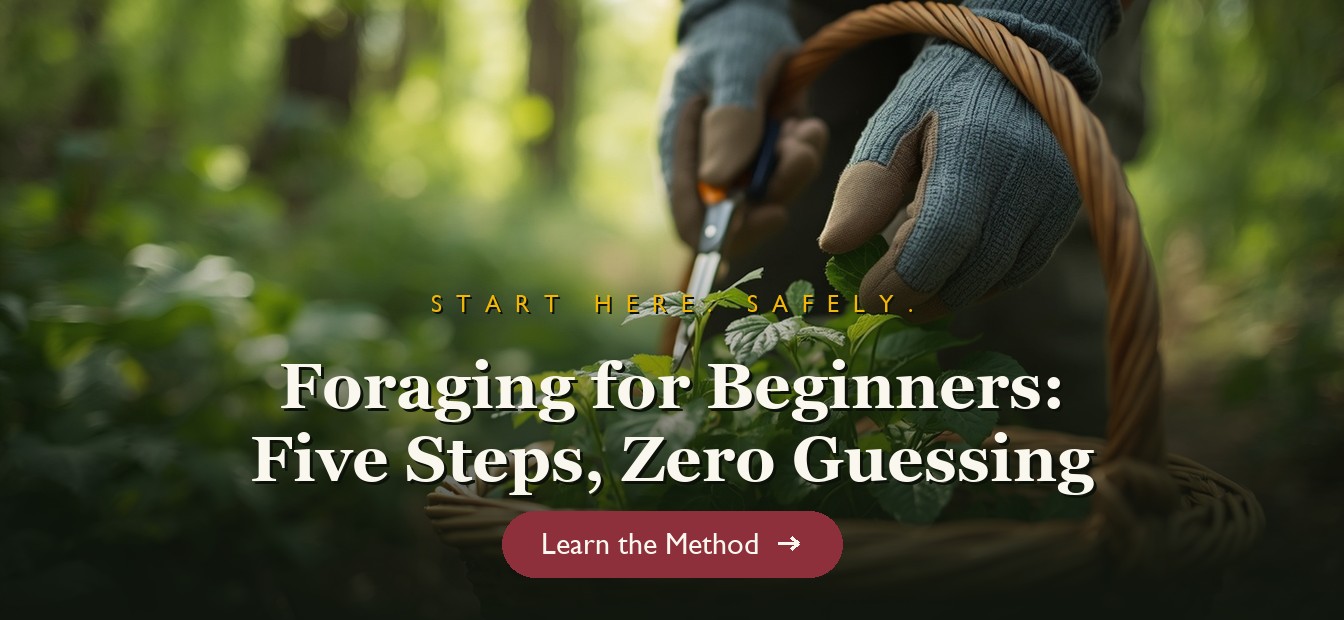
Master dandelion, nettle and blackberry first — abundant, distinctive, forgiving. Depth beats breadth.
Before eating any plant, know its dangerous twin. If you can't name the lookalike, you don't know the plant yet.
Confirm every ID with two independent reliable sources — a field guide + a local forager or verified app.
Skip roadsides, sprayed fields and dog-walk strips. Riversides upstream of towns, old orchards, your own yard.
First time with any new plant: small portion, wait 24h. Even safe plants can disagree with an individual.
A basket or breathable bag (plastic sweats your finds), scissors, gloves for nettles — and a proper field guide with color photos and lookalike warnings. That last one is the difference between a hobby and a gamble; our pick is Nicole Apelian's Forager's Guide (400 plants, every entry with its lookalike).
Ten common wild foods, where to find each one, and the #1 lookalike to avoid — on one printable sheet. We'll email it to you.